Dual-Length Stainless Steel Pet Comb: Detangle & Finish
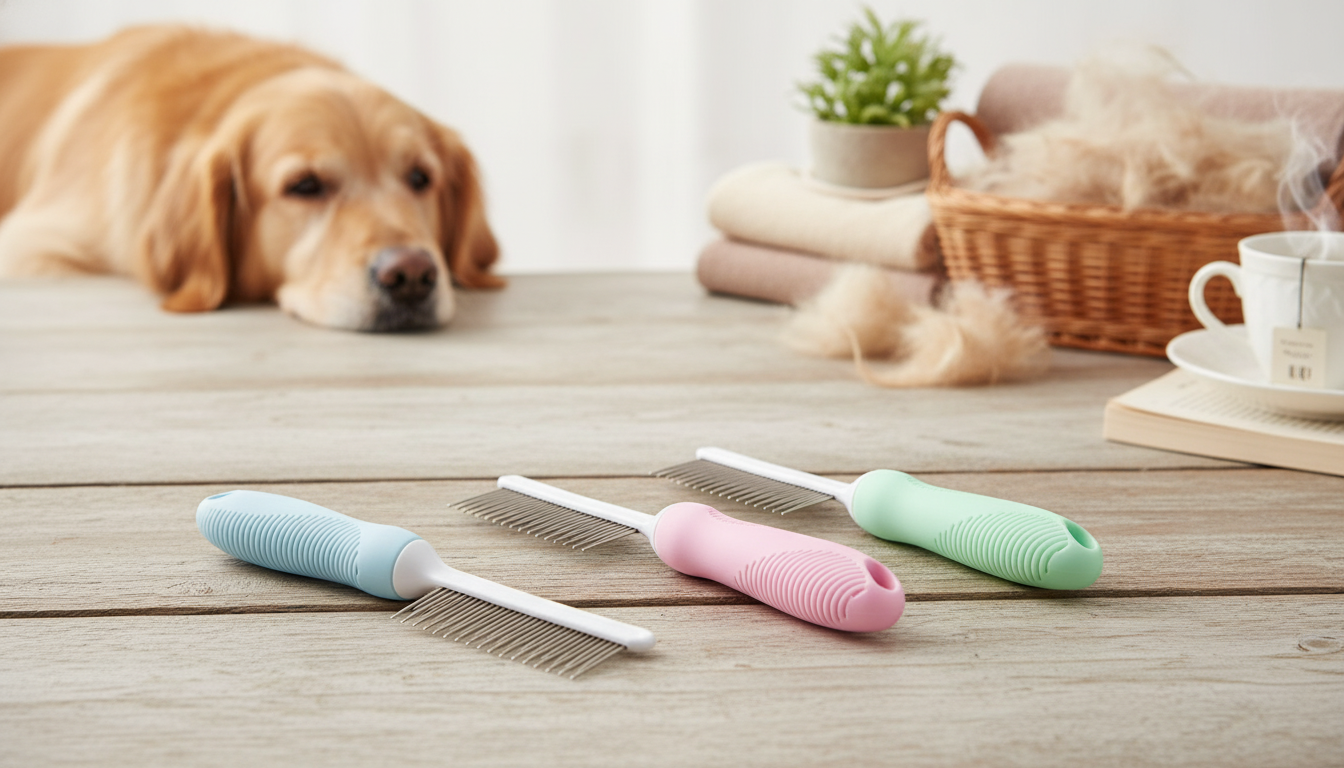
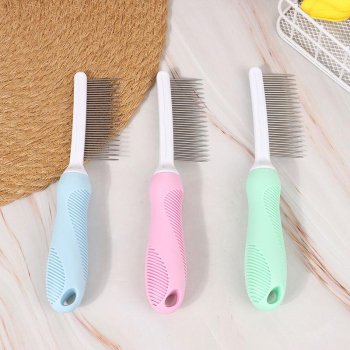
Pet Grooming Comb with Long & Short Stainless Steel Teeth
A dual-length tooth comb is a simple tool that can make brushing faster and more comfortable—especially for pets with mixed coat lengths, feathering, or areas that mat easily. Long teeth help reach through topcoat to loosen undercoat and tangles, while short teeth refine the finish, catch small knots, and lift debris close to the skin. With stainless steel teeth, the comb stays smooth, easy to clean, and resistant to rust, making it a practical choice for regular home grooming between professional appointments.
What a long-and-short tooth comb does differently
Not all combs behave the same way once they hit a dense patch of fur. A long-and-short tooth layout is designed to keep contact through the coat while letting you work in stages—from “separate and loosen” to “smooth and verify.”
- Long teeth reach deeper to separate fur layers, helping detangle and lift loose undercoat without relying on heavy pressure.
- Short teeth refine the surface coat, catch fine tangles, and help smooth after detangling.
- Alternating tooth lengths can reduce “skipping” over dense areas, improving contact through the coat.
- Useful for targeted grooming on legs, tail, behind ears, and around the collar area where knots form quickly.
Best uses by coat type and grooming goal
A dual-length comb is especially handy when your pet’s coat changes density from one area to another (for example: thicker body, finer feathering, and soft “friction zones” under a harness). Adjust your approach based on what you’re trying to accomplish.
- Long coats: use long teeth first for separation, then short teeth to finish and check for remaining snags.
- Double coats: use the long teeth to lift and inspect undercoat; follow with short teeth to catch remaining loose hair near the skin.
- Wiry or curly coats: use gentle, small strokes to avoid pulling; combing is most effective after a light misting or after bathing and drying.
- Sensitive areas: the short teeth can help work slowly through small tangles without grabbing large sections.
| Pet/coat situation | Start with | Then use | Tip |
|---|---|---|---|
| Feathering on legs and belly | Long teeth | Short teeth | Hold hair at the base to reduce tugging. |
| Behind ears (prone to mats) | Short teeth (small sections) | Long teeth (to confirm separation) | Work outward from the edge of the mat; avoid yanking. |
| Double coat shedding season | Long teeth | Short teeth | Pair with a slicker or deshedding tool if needed; finish with the comb to check. |
| Finishing after brushing | Short teeth | Long teeth (spot-check) | If the comb glides smoothly, brushing is usually complete. |
| Spot checks for fleas/dirt | Short teeth | — | Comb over a light towel/paper to see debris clearly. |
How to use it comfortably (step-by-step)
Comfort matters as much as technique. A few small habits—short strokes, light pressure, and working in layers—can make combing feel like a quick check-in instead of a tug-of-war.
- Prep: Ensure the coat is dry and free of heavy mud. For static or mild tangles, lightly mist with a pet-safe detangling spray.
- Section the coat: Lift hair and comb in layers from ends toward the skin, using short strokes. This helps prevent tightening a knot by dragging it down the hair shaft.
- Detangle first: Use the long teeth to separate hair and loosen knots. If the comb stops, back up and work a smaller section—never force through a tight mat.
- Refine: Switch to the short teeth to smooth, remove small tangles, and check areas where knots hide (like where a collar rests).
- Check common snag points: Armpits, groin, behind ears, under a collar/harness, and the tail base often need extra patience.
- End on a positive note: Keep sessions brief and calm. Gentle handling plus a treat afterward builds tolerance over time.
For broader grooming guidance—especially if you’re building a consistent at-home routine—see the American Kennel Club’s overview of grooming basics and safe handling: American Kennel Club: Dog Grooming Basics. The ASPCA also has practical tips for maintaining skin and coat health: ASPCA: Grooming Your Dog.
Safety and comfort tips
If you’re doing debris checks (especially around the neck and tail base), it helps to know what you’re looking for. Cornell’s feline health information on fleas is a solid reference for understanding flea dirt and prevention basics: Cornell University College of Veterinary Medicine: Fleas.
Care and cleaning
When this comb is a good pick
Featured items
- Pet Grooming Comb with Long & Short Stainless Steel Teeth — a simple dual-length comb for detangling, smoothing, and quick coat checks.
- Colorful Vertical Striped Christmas Tree Ball Shower Curtain — a fun way to refresh a pet-wash or bath area while keeping splashes contained.
FAQ
How often should a pet be combed with a dual-length tooth comb?
Long-haired or mat-prone pets often do best with daily quick comb-throughs in high-tangle zones (behind ears, legs, and under collars). Medium coats may only need a few sessions per week, while short coats may be fine with weekly checks—more often during shedding season. Keep sessions short to avoid skin irritation.
Can this comb help with mats?
It can help with small tangles and early mats when you work in tiny sections, use light pressure, and add a pet-safe detangling spray. Don’t force the comb through a tight mat; severe matting is safer to address with specialized tools or a professional groomer.
Is a stainless steel comb safe for sensitive skin?
Yes, smooth stainless steel is commonly used for grooming and is easy to sanitize, but safety depends on technique. Use a gentle touch, keep the comb parallel to the skin, and stop if you see redness or your pet shows discomfort so you can check for irritation.











Leave a comment