Track Personal Growth Weekly: Printable Checklist & Scorecard
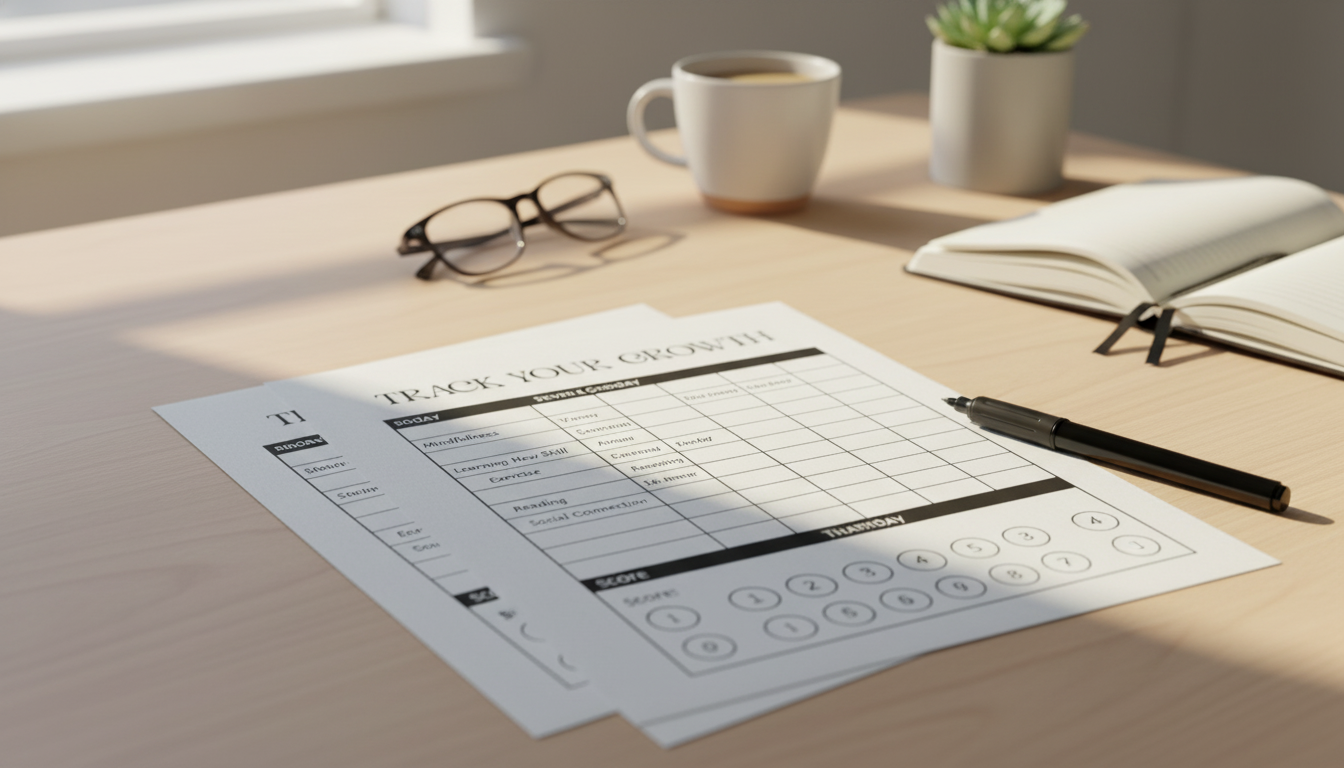
Level Up: Simple Ways to Track Your Growth (With a Printable Checklist)
Personal growth can feel invisible day to day, even when real progress is happening. A simple tracking routine makes improvements easier to notice, measure, and repeat—without turning life into a spreadsheet. This guide breaks growth into a few clear areas, shows quick ways to measure each one, and pairs it with a printable checklist that keeps the process lightweight and consistent.
What “growth” looks like when it’s measurable
Measurable growth isn’t about forcing every part of life into numbers. It’s about noticing observable changes: actions taken, habits repeated, skills practiced, and choices made under pressure. Two lenses help keep it realistic: outcomes (results) and inputs (effort, consistency, time spent). Outcomes matter, but inputs are what you can control on a normal Tuesday.
Keep tracking small and frequent. Three to five indicators updated consistently beat twenty indicators that never get touched. For each area you care about, decide the smallest proof of progress. If your goal is better communication, “one tough conversation handled calmly” counts. If your goal is healthier habits, “moved for 20 minutes” counts. Small proofs stack up into momentum.
Pick 5 growth indicators that match real life
A balanced set of indicators covers how you think, how you feel, what you’re learning, how you connect, and how you follow through. Here are practical options you can measure without extra apps or complicated systems:
- Mindset: frequency of reframing negative thoughts, self-talk quality, ability to recover from setbacks
- Health & energy: sleep consistency, movement minutes, hydration, stress level check-ins
- Skills & learning: deliberate practice sessions, courses/modules completed, feedback requested
- Relationships: meaningful conversations, boundaries kept, appreciation expressed, conflicts resolved
- Purpose & productivity: weekly priorities completed, time on high-impact tasks, follow-through rate
| Growth area | Indicator | Simple measure | How often |
|---|---|---|---|
| Mindset | Bounce-back after a setback | Hours/days to feel steady again (estimate) | Weekly |
| Health & energy | Sleep routine | Nights with a consistent bedtime | Weekly |
| Skills & learning | Deliberate practice | Number of focused practice sessions | Weekly |
| Relationships | Connection | Meaningful check-ins (10+ minutes) | Weekly |
| Purpose & productivity | Follow-through | Top 3 priorities completed | Weekly |
Use quick tracking methods that don’t require motivation
The best tracking method is the one you can do when you’re tired. Keep the friction low with tools that take seconds, not willpower.
- The 60-second weekly review: circle wins, note one lesson, choose one focus for next week.
- The “done list”: record what was completed (especially hard things) to counter forgetfulness and negativity bias.
- Tiny ratings (1–5): track energy, stress, confidence, or focus with one number—then look for patterns.
- Streaks with flexibility: aim for “5 days out of 7” instead of perfection to reduce all-or-nothing thinking.
If you want the psychology behind why tracking works, self-monitoring is a well-established behavior-change tool: it increases awareness and makes choices easier to adjust in real time (see the APA Dictionary of Psychology definition of self-monitoring).
Turn observations into a simple weekly scorecard
A weekly scorecard keeps the process honest and calm. Start by recording your current numbers for 1–2 weeks before trying to optimize anything. That baseline becomes your “before” snapshot.
For each focus area, choose one lead measure (effort) and one lag measure (result). Lead measures might be “practice sessions” or “check-ins started.” Lag measures might be “confidence rating” or “conflicts resolved.” Add a note field for context (travel, illness, deadlines, family stress) so the data doesn’t shame you—it informs you.
| Area | Lead measure (effort) | Lag measure (result) | Weekly note |
|---|---|---|---|
| Health | 3 workouts | Energy average 4/5 | Late nights midweek |
| Learning | 2 practice sessions | 1 new concept applied | Asked for feedback |
| Relationships | 2 check-ins | Fewer avoidant moments | Set one boundary |
| Productivity | Time-blocked 4 days | Top 3 done: 2/3 | Overcommitted Friday |
Over time, improvement often shows up as steadier consistency rather than sudden leaps. If your sleep becomes more regular or your stress recovers faster, that’s real progress. For habit-building principles that support this approach, see Atomic Habits.
Printable personal growth checklist: make it a weekly ritual
If you want a ready-to-use page that’s designed for quick weekly tracking, start here: Printable Personal Growth Checklist: Level Up.
Common mistakes that hide progress (and what to do instead)
If health is part of your tracking, keep expectations grounded in basic wins—consistent movement, better sleep rhythms, and stress recovery. For a research-backed overview of why movement matters, the CDC’s benefits of physical activity is a helpful reference.
A simple 14-day restart plan
Helpful tools to support your tracking routine
- Level Up: Simple Ways to Track Your Growth | Printable Personal Growth Checklist | Learn How to Measure Personal Growth Simply (a lightweight weekly page you can print and repeat).
- Wireless Mechanical Gaming Keyboard with Customizable LCD & RGB Lighting (useful if typing a daily “done list” feels easier than handwriting).
- Cute Cartoon Duck Plush Toy – Soft Lifelike Goose Doll for Kids & Collectors (a simple comfort cue can help anchor a short evening check-in routine).
FAQ
How can personal growth be measured simply?
Pick 3–5 indicators and measure them weekly using both an effort metric (like practice sessions) and an outcome metric (like confidence rated 1–5). Simple examples include sleep consistency, meaningful conversations, and completing your top priorities.
How often should growth be tracked?
Daily checkmarks plus a quick weekly review is a sustainable rhythm for most people. Review trends monthly so you can see patterns without overreacting to one off week.
What should be on a personal growth checklist?
Include behavior-based items across mindset, health, learning, relationships, and productivity, plus one reflection prompt and a “next week’s focus” line. The goal is to track actions you can repeat, not abstract ideals.











Leave a comment